
The Hidden Cost of Fragile Display Equipment in High-Volume Catering
High-volume catering is not a delicate environment. It operates under compressed timelines, tight load-ins, fast turnovers, and repeated handling by multiple staff members across every event cycle. Yet many operators continue to rely on display equipment designed for occasional use rather than sustained, professional execution. Glass, ceramic, MDF, and decorative props may appear serviceable at first glance, but volume exposes their limitations quickly and consistently.
The real cost of fragile display equipment rarely appears on an invoice. It surfaces slowly, through inefficiency, inconsistency, replacement cycles, and operational drag. What seems like a small compromise at purchase becomes a structural liability over time.
Breakage Is Not an Accident. It Is a System Failure.
In high-volume operations, breakage is not random. It is predictable. It happens during transport when equipment shifts under load, during rushed setups, during strike when fatigue sets in, and whenever less-experienced staff rotate into the workflow. Each incident may feel isolated—a cracked riser, a chipped edge, a slight wobble—but across dozens or hundreds of events, these failures accumulate into a systemic problem.
Replacement orders interrupt inventory planning. Emergency sourcing disrupts consistency. Missing or damaged pieces force improvisation on-site. Fragile equipment turns what should be a controlled system into a recurring risk.
The Operational Tax No One Measures
Most catering operations closely monitor food cost, labor, and logistics. Far fewer measure the operational tax imposed by fragile display equipment. That tax shows up as additional packing time, excessive protective materials, slower setup to avoid damage, and staff hesitation around pieces perceived as delicate or unstable.
When equipment requires caution, it reduces speed. When it requires replacement, it erodes margin. This is not a one-time penalty—it repeats every event, compounding quietly until it becomes normalized inefficiency.
Inconsistent Tools Create Inconsistent Execution
High-volume catering depends on repeatability. Consistent heights, predictable placements, and muscle memory allow teams to move quickly and confidently. Fragile equipment disrupts this rhythm. A single missing or damaged piece forces last-minute decisions, alters layouts, and breaks standardization.
When teams must improvise, execution slows. Questions replace action. Visual hierarchy collapses. The issue is not training or talent—it is equipment that cannot withstand repetition at scale.
Lifecycle Cost Matters More Than Upfront Price
Lower upfront costs often conceal higher long-term expense. Decorative and fragile materials break sooner, degrade faster, and require ongoing replacement. Over time, they demand repeated capital outlay while delivering diminishing consistency.
Professional-grade display systems are engineered to absorb transport, handling, and repeated use without loss of form. When equipment lasts longer, annual spend decreases. When replacement stops, margins stabilize. Durable systems function as assets, not consumables.
Degradation Undermines Presentation Before Failure Occurs
The most damaging phase of fragile equipment is not catastrophic failure—it is gradual degradation. Micro-cracks, chipped edges, and uneven bases rarely cause collapse, but they subtly erode perception. Clients may not identify the issue explicitly, yet presentation loses authority and structure begins to feel improvised rather than intentional.
In premium environments, this erosion of confidence matters. Visual clarity and structural integrity communicate professionalism long before food is tasted.
Built for Volume, Not Occasions
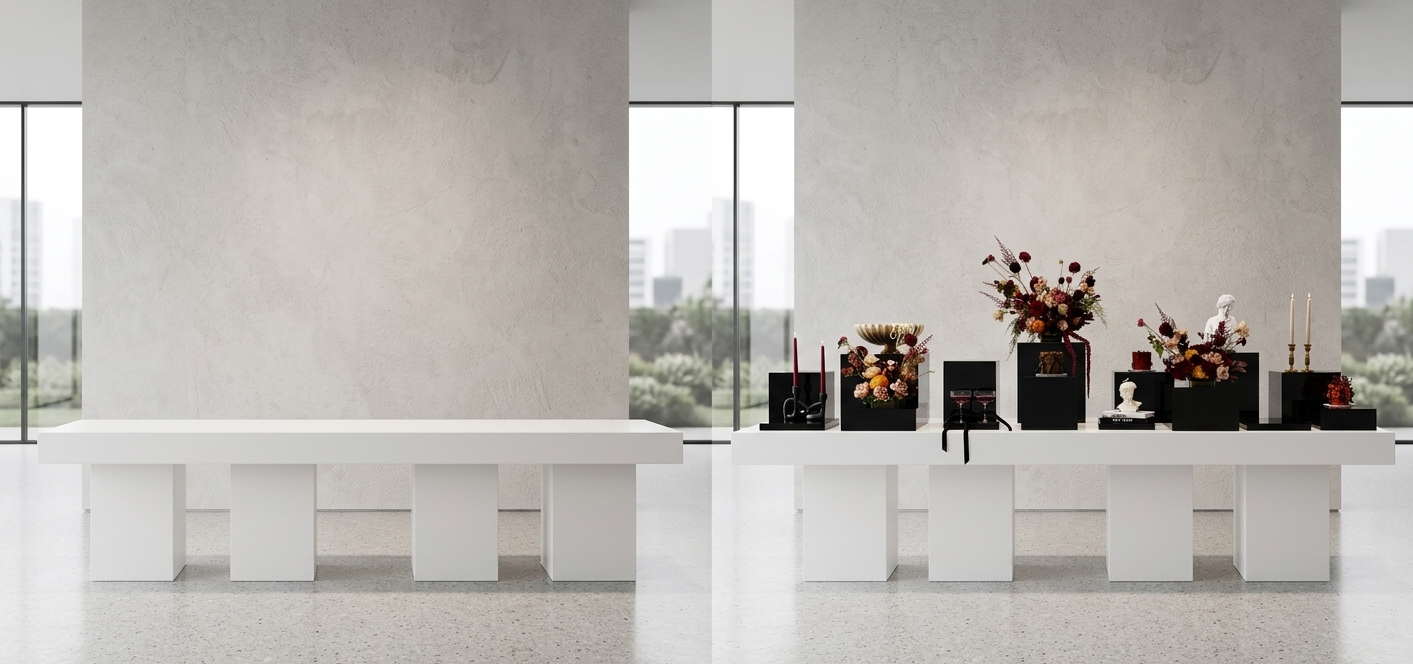
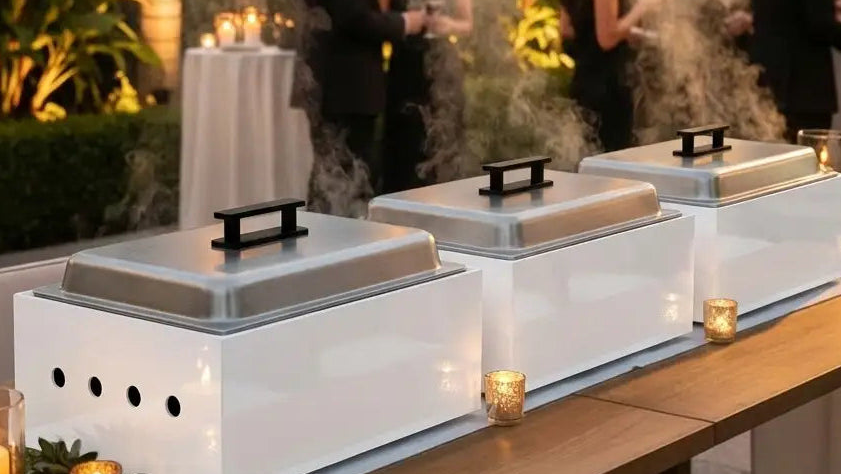
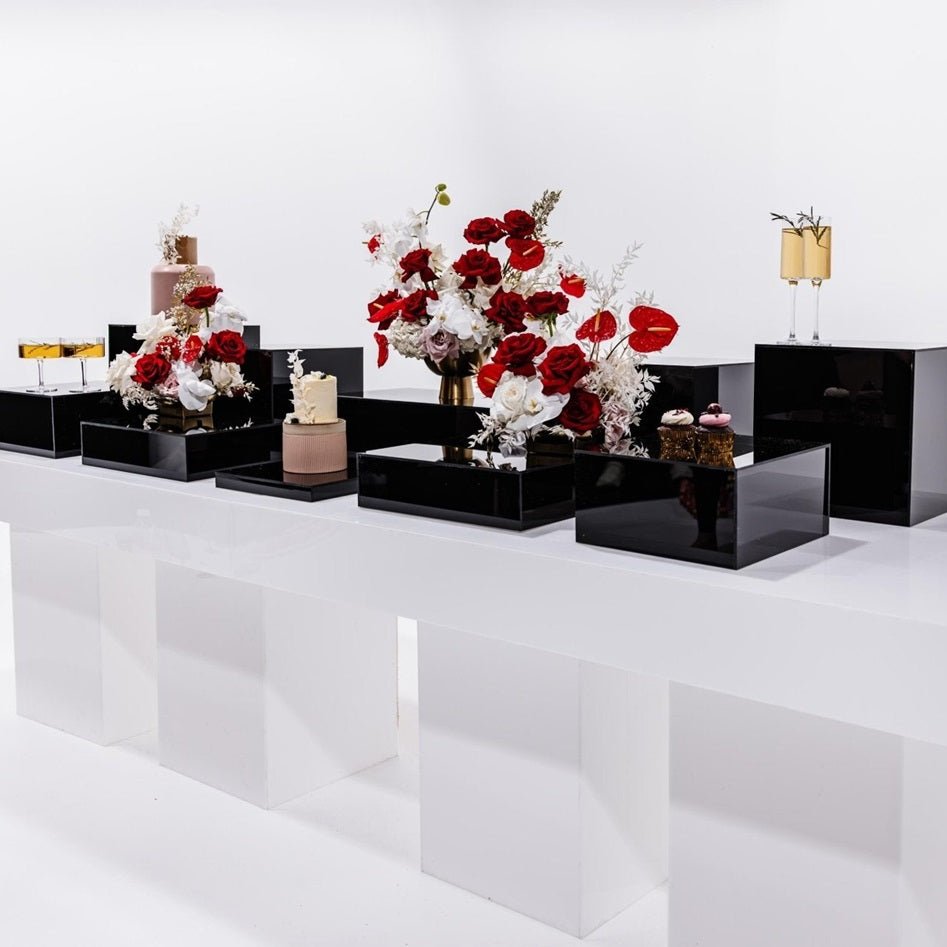
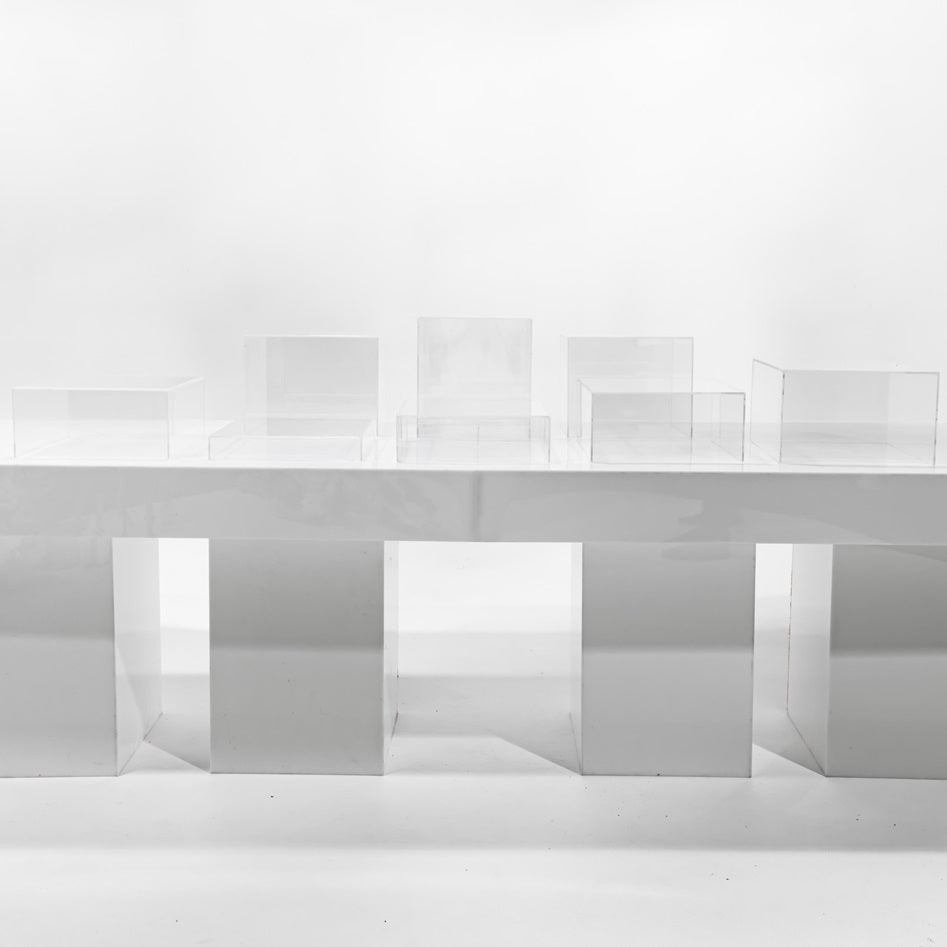
Plinths New York designs architectural display systems specifically for high-volume operators. Materials are selected for repeated transport and handling. Geometry is engineered for stability under load. Heights are standardized to support fast replication and clean visual hierarchy. Every form is intentional, reducing decision-making and supporting efficient execution.
This is not decoration. It is operational control.
Backed by a 3-Year Craftsmanship Warranty
Every Plinths New York display system is supported by a three-year craftsmanship warranty. This warranty reflects a commitment to professional-grade performance, material integrity, and long-term reliability in demanding environments. It exists because the products are designed to endure sustained use—not occasional deployment.
For operators, this warranty represents confidence. Confidence that equipment will perform consistently. Confidence that assets are protected. Confidence that investment decisions are grounded in durability, not replacement cycles.
The Question That Defines Professional Equipment
In high-volume catering, the question is not whether a piece looks good at one event. The question is whether it performs across every event, with every team, under real operational pressure.
Fragile tools fail quietly until they do not. Professional-grade systems remove the variable entirely.