
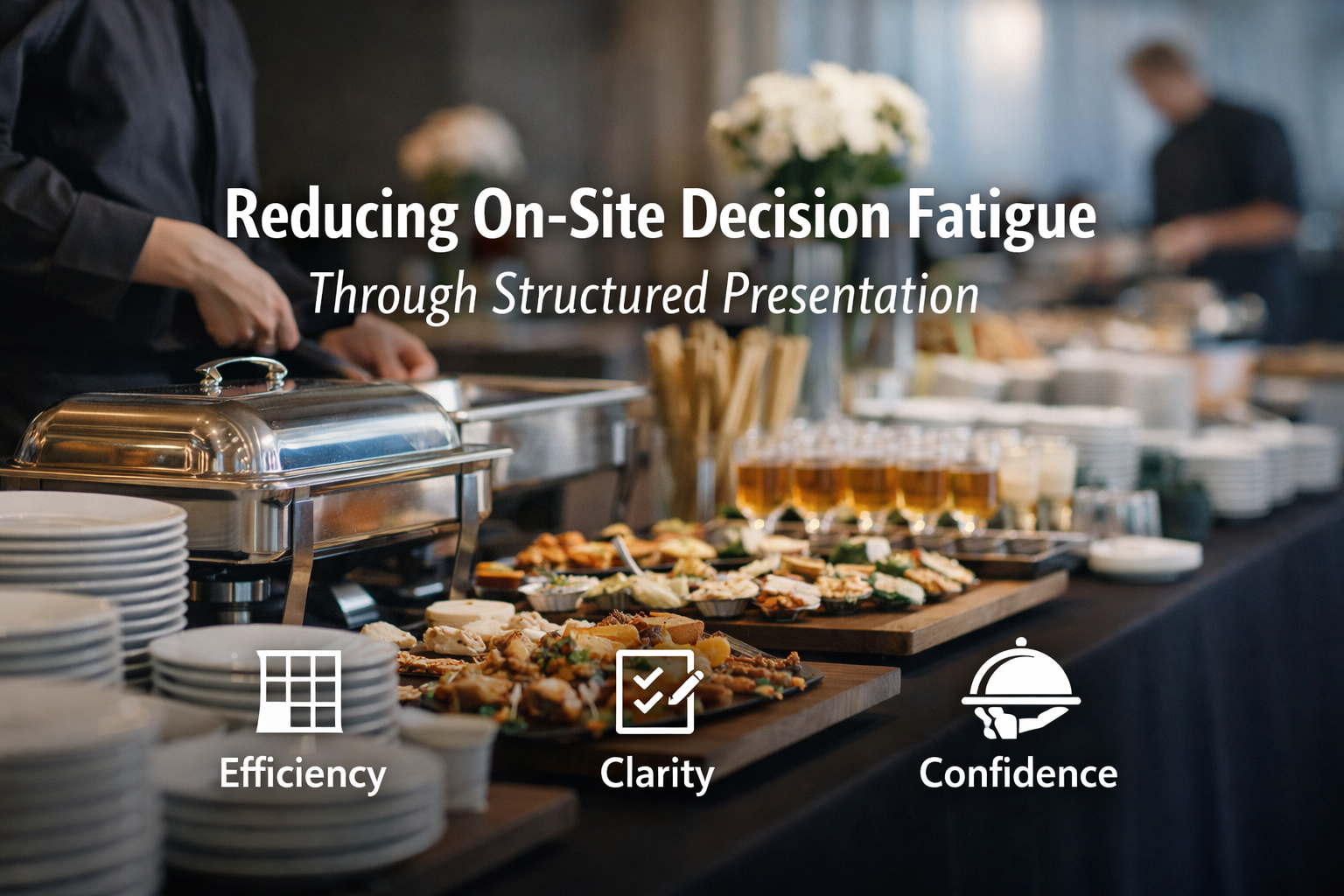
Reducing On-Site Decision Fatigue Through Structured Presentation

In high-pressure, on-site environments, clarity isn’t a luxury — it’s an operational advantage. For caterers working events, corporate offices, brand activations, or shared workspaces, the ability to move quickly, make confident decisions, and keep service running smoothly depends heavily on how information and space are presented.
At Plinths New York, we work closely with teams whose success is defined by execution under time constraints. One recurring issue we see across on-site operations is decision fatigue — and its impact is especially pronounced for catering teams juggling logistics, staff coordination, and client expectations in real time.
Decision Fatigue in On-Site Catering Environments
Decision fatigue isn’t about poor judgment — it’s about cognitive overload. For caterers, this often shows up through small, constant questions:
-
Where does this station belong?
-
Which setup is approved for this client?
-
Who is responsible for this area?
-
What needs to happen next — and in what order?
When these answers aren’t immediately clear, teams slow down. Service becomes reactive instead of proactive, and experienced staff are forced to spend energy problem-solving things that should already be resolved.
Why Catering Teams Are Especially Affected
Catering operations are uniquely complex. They combine tight timelines, physical movement, multiple stakeholders, and zero room for confusion during live service.
Unlike digital workflows, on-site catering doesn’t allow for pausing, rechecking, or endless clarification. Every extra decision — every moment of uncertainty — compounds stress and increases the risk of error.
This is where structured presentation makes a measurable difference.
How Structured Presentation Supports Better Service
Structured presentation is not about rigid rules or over-design. It’s about setting teams up to succeed by making expectations, priorities, and flows immediately understandable.
1. Clear Hierarchy Keeps Teams Focused
When information is presented with a clear hierarchy, staff know what matters most without needing instruction.
For catering teams, this can look like:
-
Primary service stations clearly defined
-
Prep, staging, and service zones visually distinct
-
Setup priorities communicated through layout, not last-minute direction
Clear hierarchy reduces verbal back-and-forth and allows teams to stay in motion.
2. Consistency Reduces Training and Oversight
Predictable presentation — consistent layouts, labeling, and spatial logic — helps staff adapt faster across different sites and events.
When teams recognize familiar patterns, they don’t need constant supervision. New or rotating staff integrate more easily, and experienced leads can focus on quality instead of micromanagement.
3. Fewer Visible Choices, Faster Execution
Too many options slow teams down. Structured presentation limits visible choices to what’s relevant at that moment.
For example:
-
Only the active service configuration is visible
-
Backup or alternate setups are staged, not competing for attention
-
Decision points are sequenced instead of stacked
This approach helps teams act decisively without second-guessing.
4. Spatial Structure Improves Flow
Physical structure directly influences behavior. Thoughtful spacing, alignment, and grouping guide movement intuitively.
Well-structured environments help catering teams:
-
Move efficiently between prep and service
-
Avoid congestion during peak moments
-
Maintain clean, professional presentation throughout service
When space works with the team — not against it — performance improves naturally.
The Business Impact of Reduced Decision Fatigue
Reducing decision fatigue isn’t just about comfort; it’s about outcomes.
Catering teams operating in well-structured environments consistently see:
-
Faster setup and breakdown times
-
Fewer service interruptions
-
Clearer accountability among staff
-
More confident client-facing execution
Most importantly, teams are able to focus on hospitality — not problem-solving.
The Plinths New York Perspective
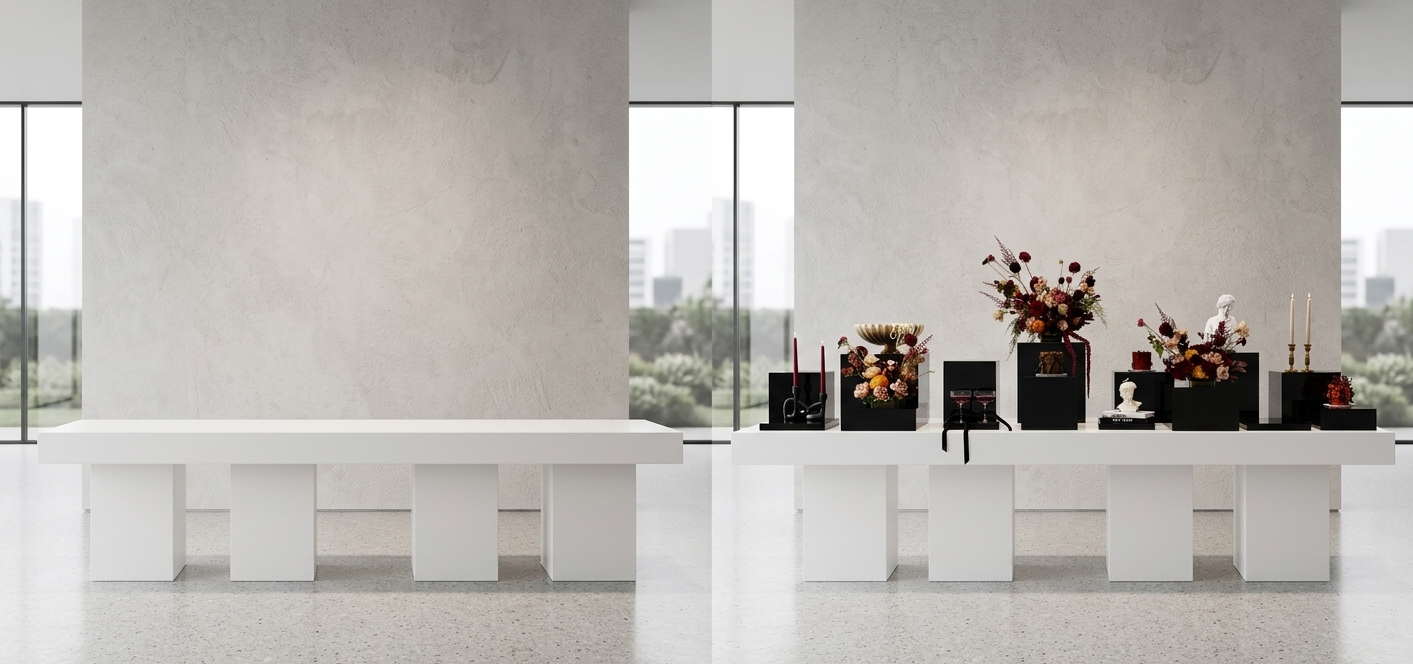
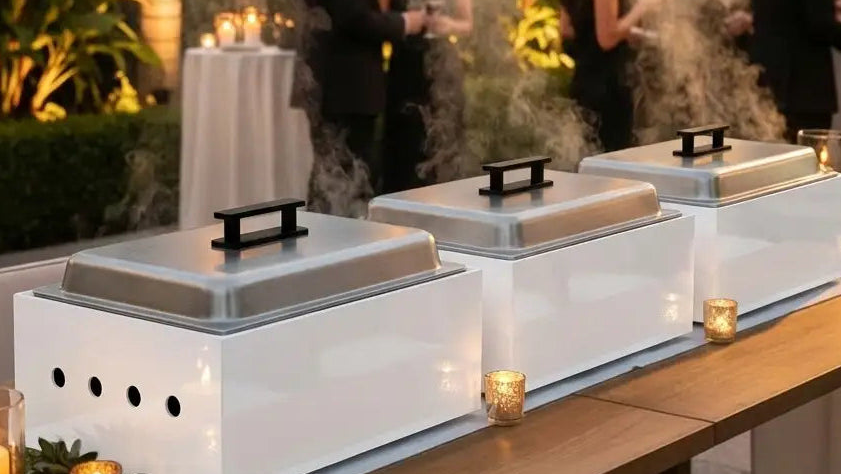
At Plinths New York, we approach structured presentation as an operational tool. Our work supports catering teams by aligning spatial design, presentation systems, and on-site workflows into a single, cohesive experience.
Our objective is simple:
Reduce friction so teams can execute flawlessly under pressure.
By embedding clarity into the environment itself, we help catering partners deliver consistent, high-quality service — regardless of venue complexity.
Final Thought
In on-site catering, every decision costs time and energy. The fewer unnecessary decisions teams have to make, the better the service becomes.
Structured presentation turns space into a silent coordinator — guiding action, reducing stress, and enabling teams to perform at their best when it matters most.